Records accumulate. The context required for work stays scattered.
A decision may be in meeting notes, its scope in a contract, and its replacement in a later policy. Missing any one of them can send both people and AI in the wrong direction.

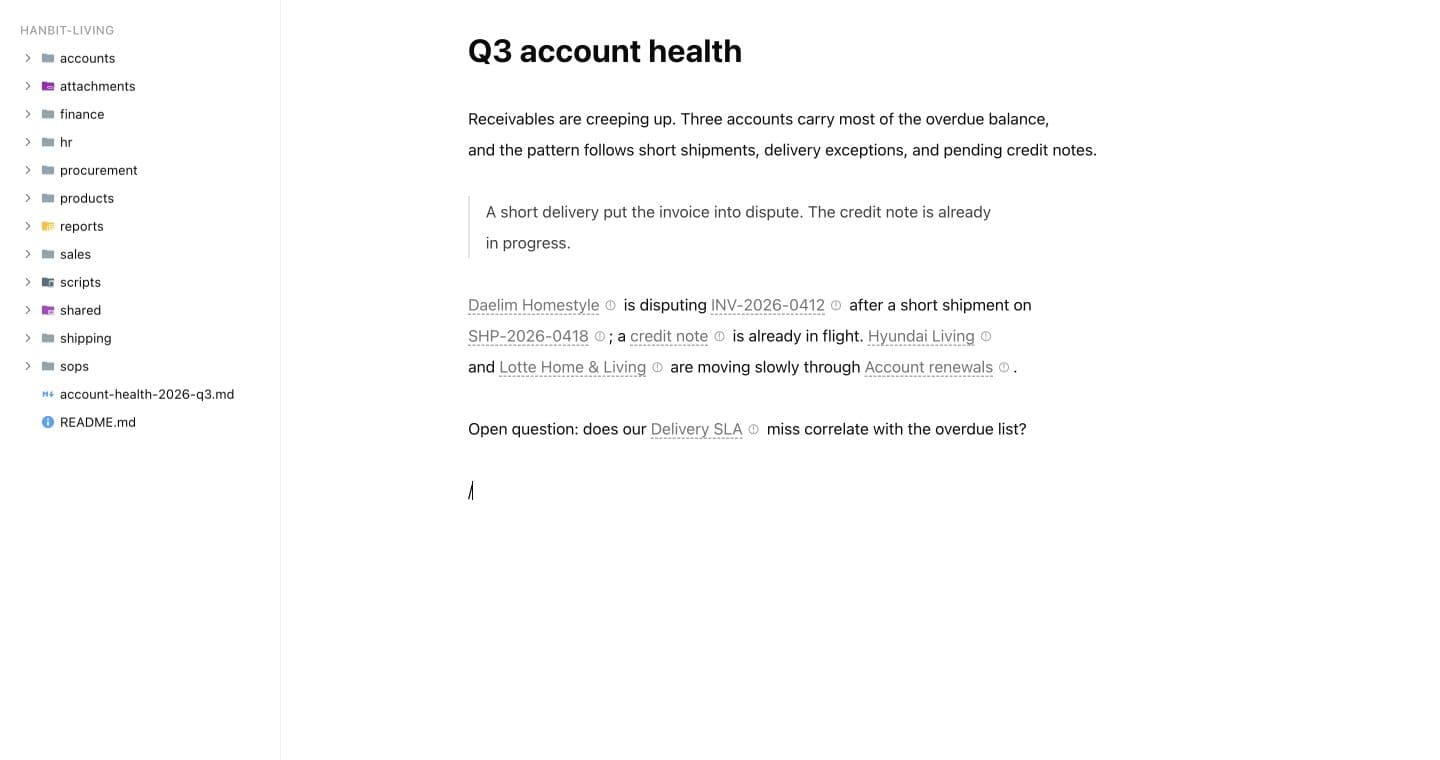
Consilience connects documents, data, decisions, and code into an ontology people can shape directly, then gives agents the context to perform real work on a computer.
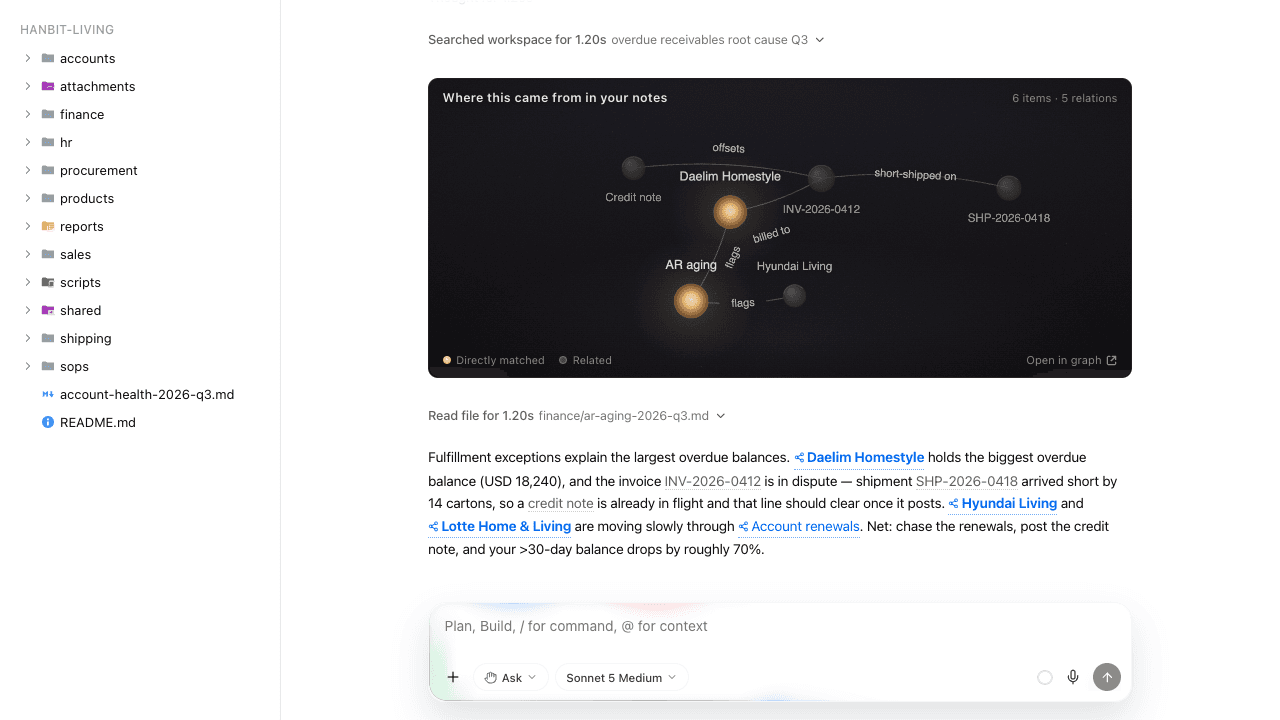
A decision may be in meeting notes, its scope in a contract, and its replacement in a later policy. Missing any one of them can send both people and AI in the wrong direction.
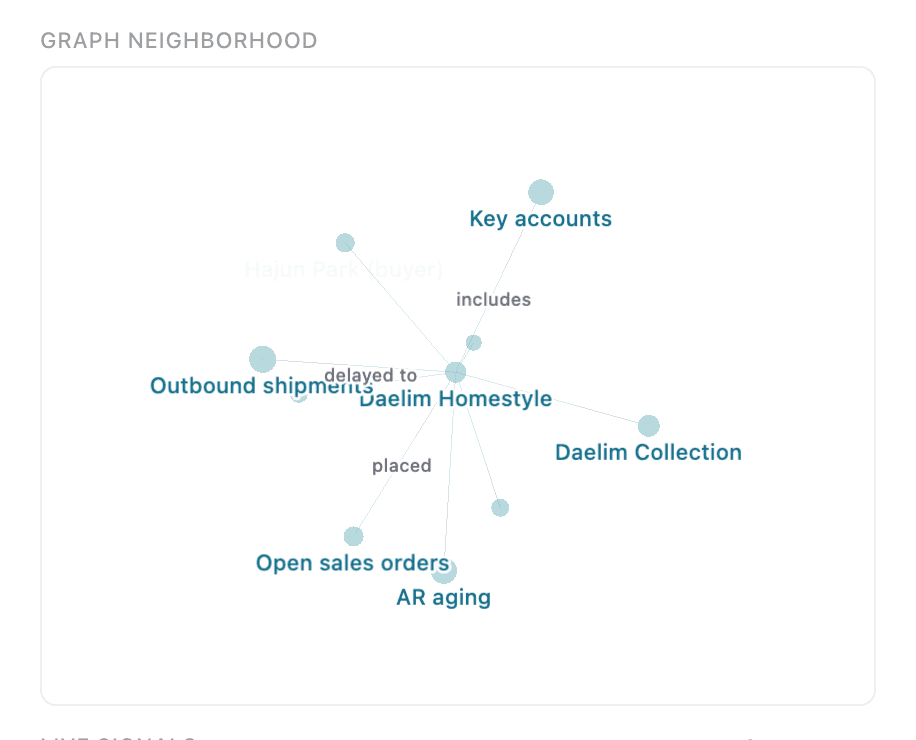
Real answers require people, projects, decisions, time, evidence, and change history to be read together. Consilience makes those relationships explicit and keeps human corrections available to the next task.
Source material, human-shaped meaning, retrieval, agent action, and verified results remain connected throughout the work.
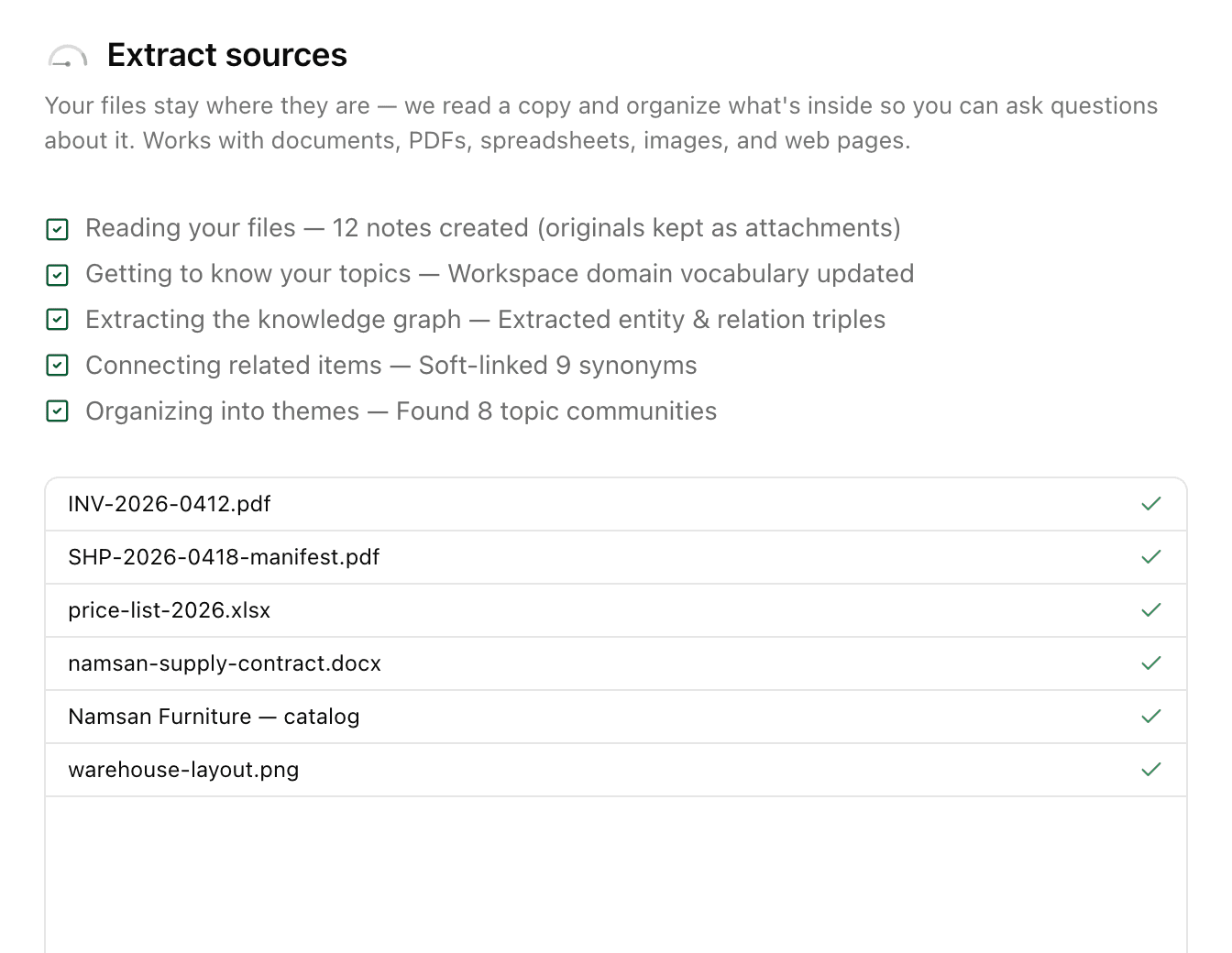
Read documents, tables, code, images, and webpages while preserving originals and provenance.
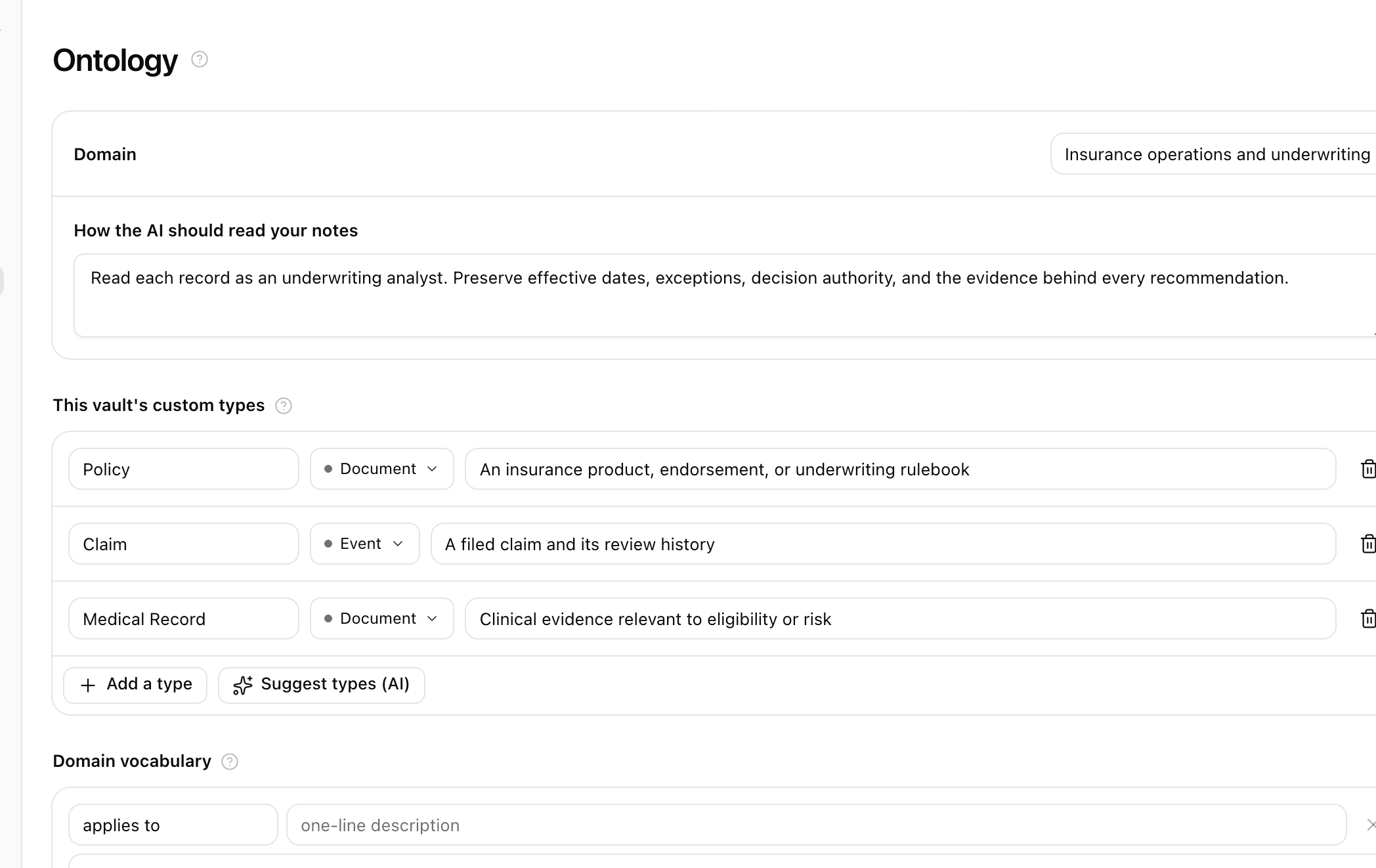
Consilience proposes entities, aliases, relationships, and topics; knowledge owners review and correct them.
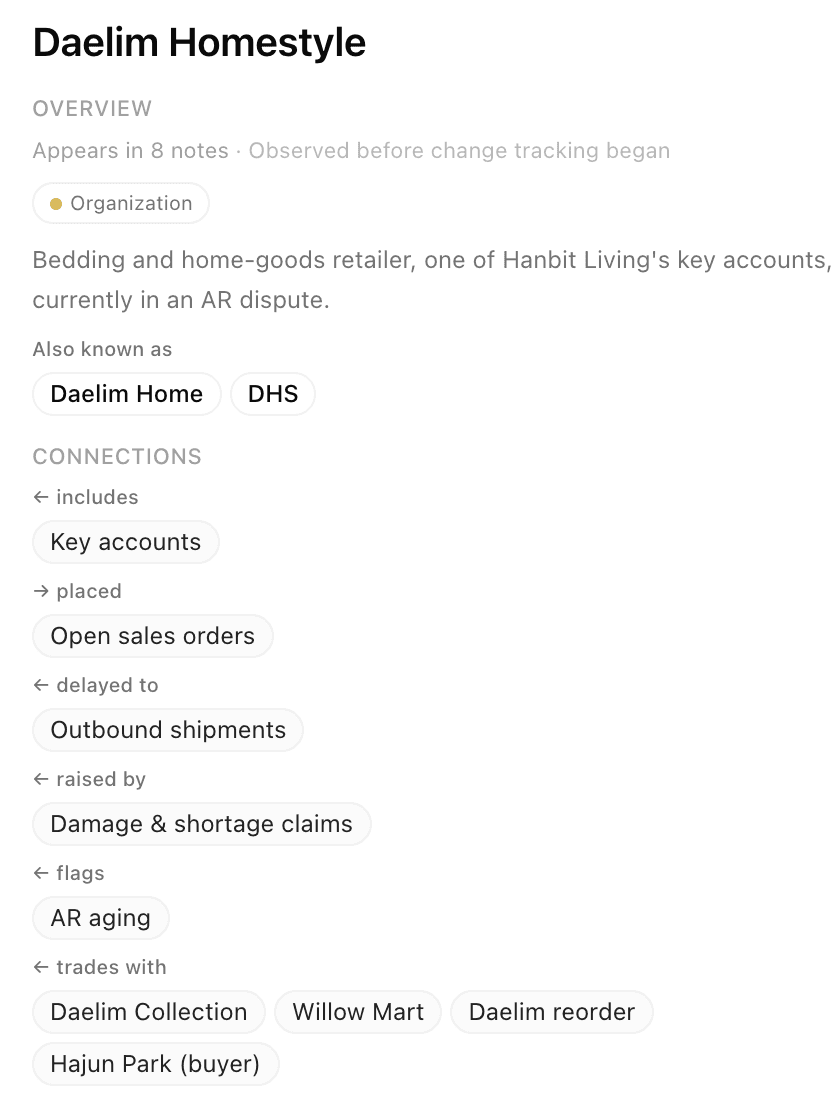
EngramRAG follows people, projects, decisions, time, and evidence to connect records into the chain the task requires.
Agents plan, use tools, and verify outcomes. Their work and human corrections carry into what comes next.
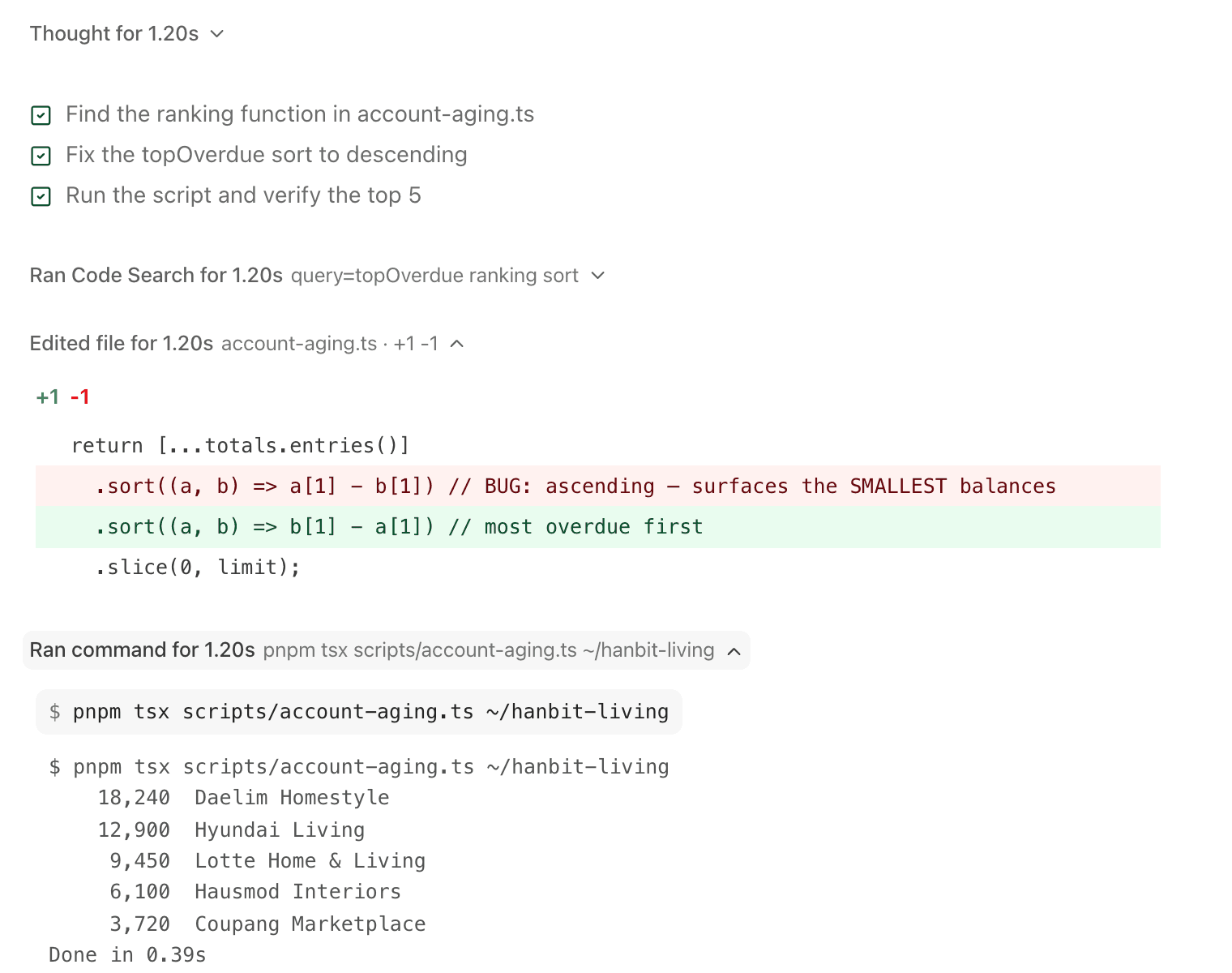
The agent reads context from the knowledge graph, plans, uses the tools the task requires, and observes the result. It verifies through builds, tests, or rendering, then revises and runs again when needed. Consequential actions stay within explicit approval boundaries.
It does not stop at documents or the knowledge graph. The same context carries into code, terminals, browsers, connected apps, and the screen itself—within the permissions you set.
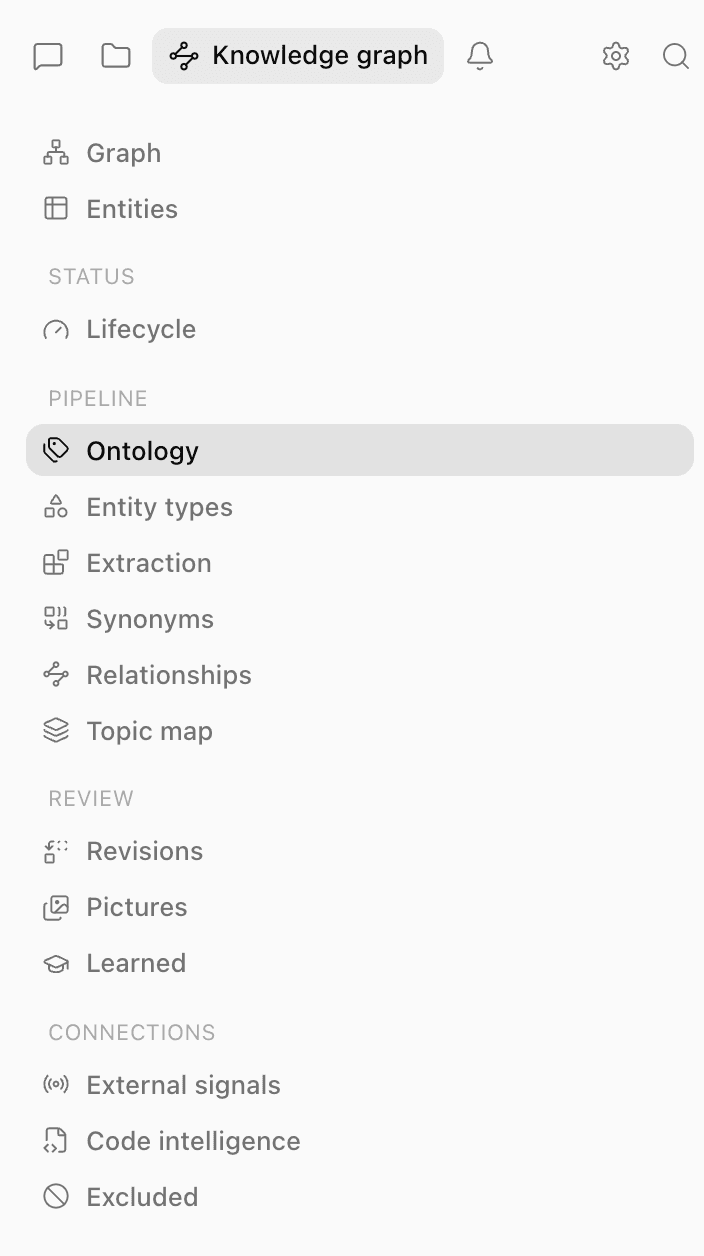
Define domain terms, entity types, aliases, and relationships, then review proposed links against their sources.
Follow entities and relationships, and map the themes and bridge concepts that connect records.
Reconstruct what is valid now through meaning, time, evidence, and revisions—with every source visible.
Keep tables, formulas, and diagrams in editable, portable files connected to their provenance.
Read and plan complex work first, then apply coordinated changes across files after approval.
Run commands, inspect builds, tests, and renders, and revise until the goal is met.
Read the screen and operate browsers and desktop apps with mouse and keyboard.
Use connected tools, web research, and live feeds under one permission and approval model.
Follow code structure while editing, reviewing diffs, and working with commits and branches.
Use knowledge and brand context to render, inspect, and revise visual work.
Turn places into coordinates and build maps, routes, and reachability analyses.
Choose the model and reasoning effort, scope tools, and roll back at message checkpoints.
EngramRAG reconstructs what is valid now by following meaning, time, relationships, evidence, and revisions across records.
Bring material in while keeping its original location and provenance.
Resolve concepts and relationships into a model the team can review.
Reconstruct context through meaning, time, relationships, and evidence.
Carry human judgment forward while preserving what changed.
There is no need to rewrite material for another system. Source text and original files remain available while Consilience adds entities, relationships, provenance, and revision history.
Human approvals and corrections shape future retrieval and agent work. Authored knowledge stays in inspectable, portable Markdown rather than disappearing inside an opaque index.