Identify the compound and sample
Match the compound’s internal and external names, then check which preparation batch each experiment used.

Connect compounds, experiments, protocols, raw data, and research decisions. Understand which findings can be compared, which reports share a source, and what evidence is still missing.
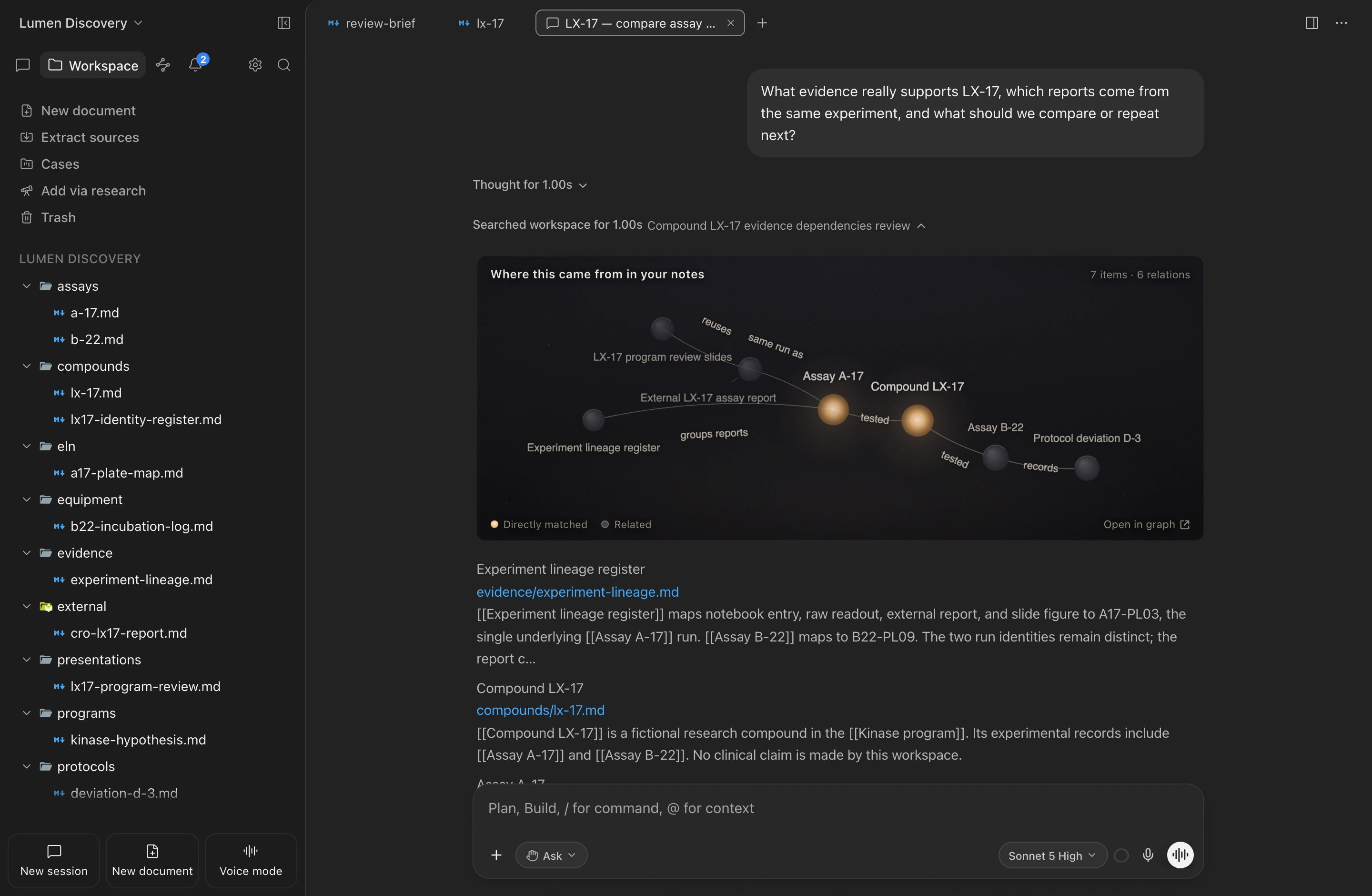
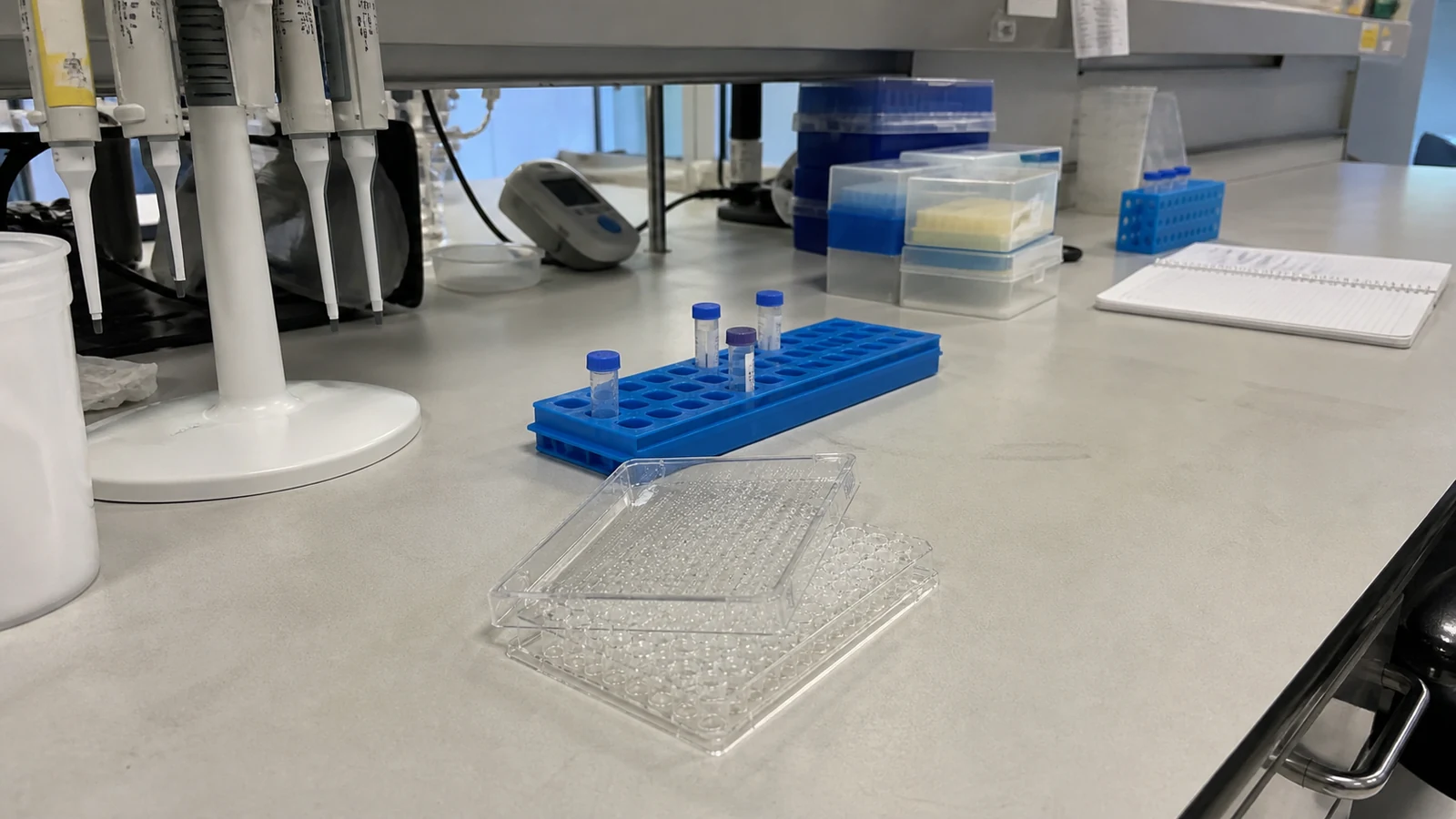
Several reports cite the same experiment but name the tested compound differently. A later experiment uses a sample from another preparation batch, tested at a different temperature and time point. Tracing each finding to its source experiment reveals which results are independent and where direct comparison is limited.
The fictional Lumen Discovery workspace brings together notebooks, reports, and sample records for compound LX-17. Compare the experiments, examine recorded protocol deviations, and prepare a follow-up study for the research team to review.
Match the compound’s internal and external names, then check which preparation batch each experiment used.
Trace reported findings back to the lab notes and original measurements that support them.
Review methods, samples, and conditions to establish which results can be meaningfully compared.
Review the evidence behind each conclusion to identify questions the next experiment needs to answer.
Compare A-17’s 24-hour measurement at 37°C with B-22’s 48-hour measurement at 35°C. Review their preparation batches and controls before interpreting the difference; these records do not establish its cause.
What can we compare between the LX-17 assays, and which conditions or materials differ?
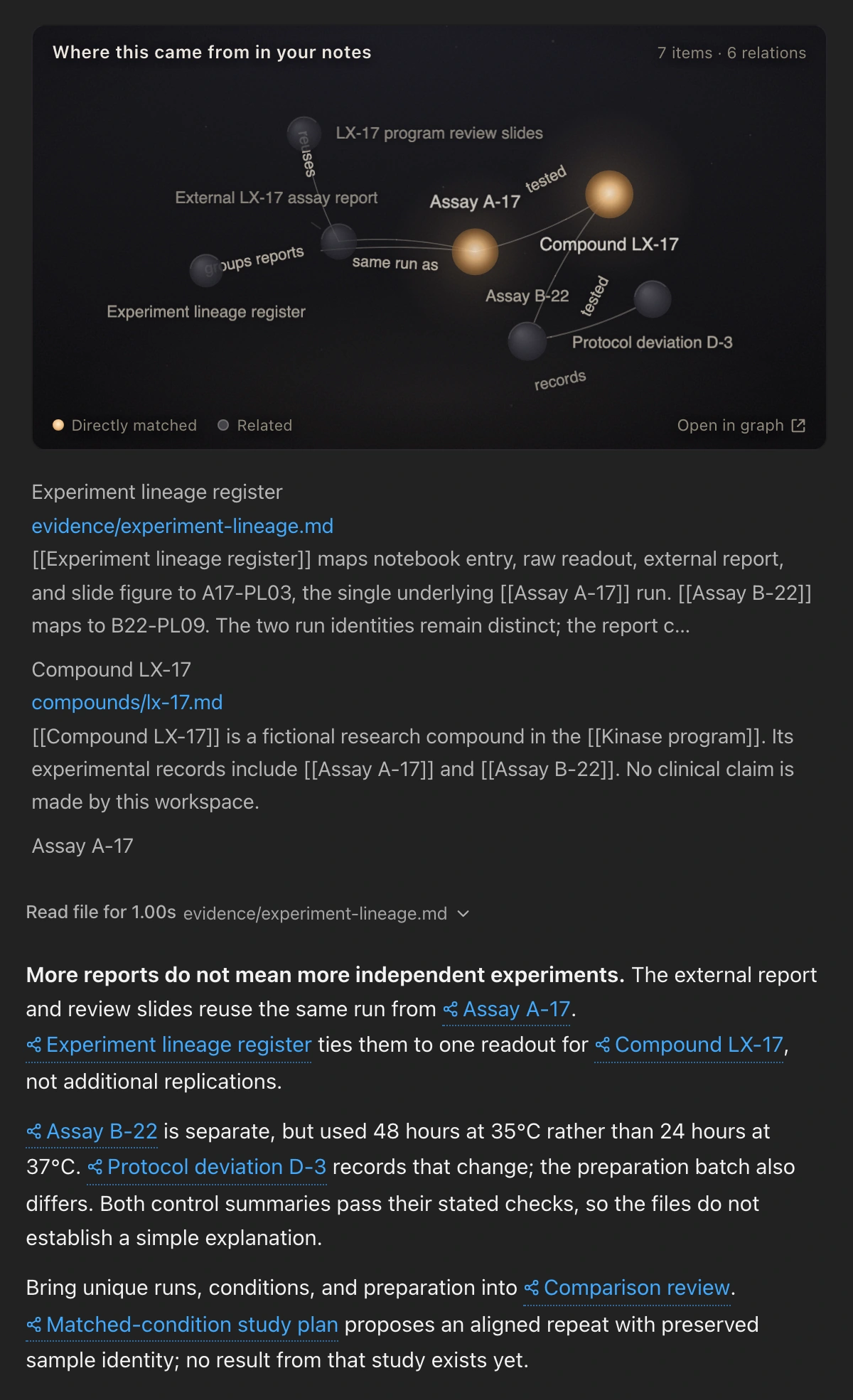
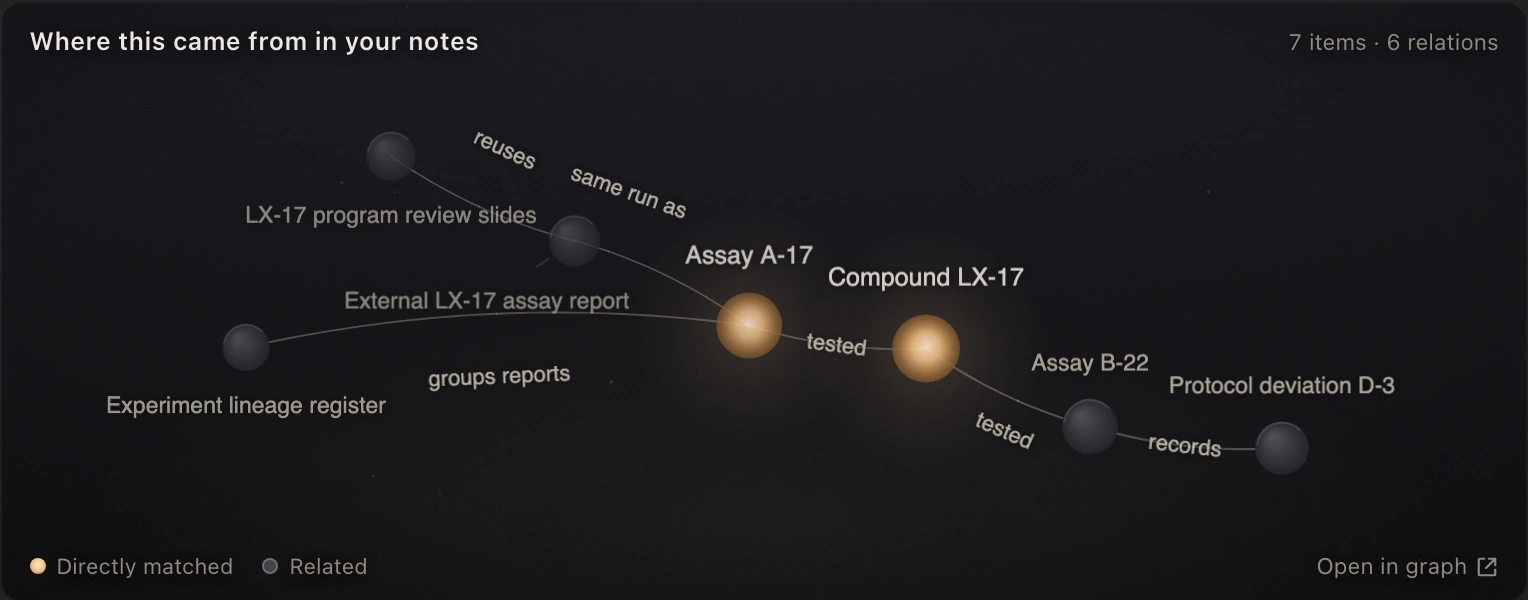
Use experiment and measurement identifiers to connect the notebook, external report, and presentation. The different compound names lead back to A-17, so these reports represent one underlying experiment.
Do the external LX-17 report and program slides add independent experiments?
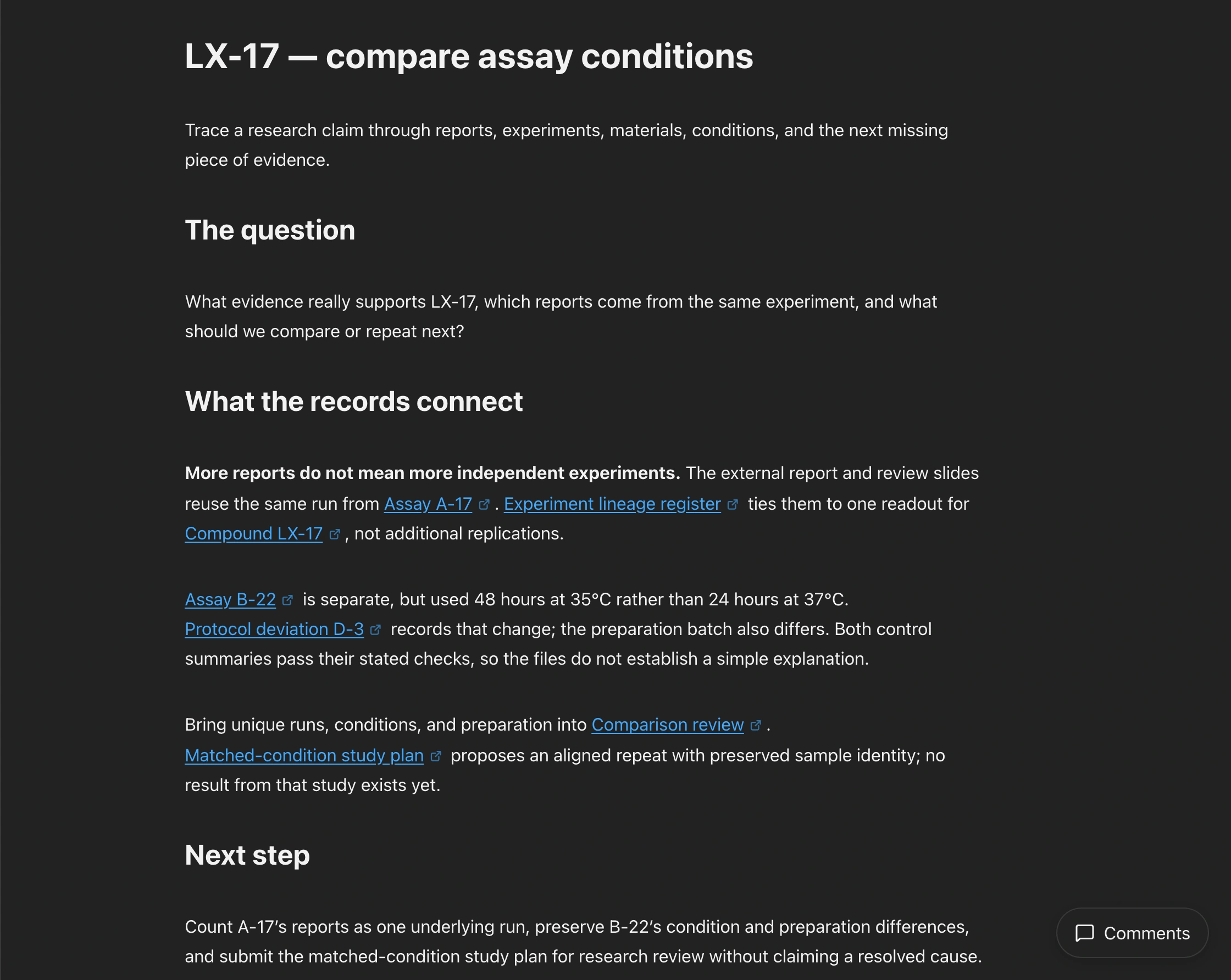
Summarize the distinct experiments and the limits of comparing them. Draft a study plan with aligned conditions, clearly identified samples, and the required controls for the research team to review.
Prepare the LX-17 review and a matched-condition study proposal from the evidence gaps.
Connect papers by target, compound, and reported method to examine the evidence around a research hypothesis.
Bring protocols, decisions recorded in lab notes, and unresolved questions into a project brief linked to its sources.
Compare recurring deviations with the methods, reagents, and experiment records for each case.
EngramRAG
EngramRAG matches compound aliases while keeping each experiment, preparation batch, and recorded condition distinct. Saved reviews let the team assess new results alongside earlier findings and unresolved questions.
Match internal and external compound names while preserving the identity of each sample batch.
Connect reports derived from an experiment to its original data and recorded departures from the protocol.
Keep comparison limits and planned checks available when new evidence arrives.
Bring protocols, results, and research notes into one workspace so the team can review each finding with its methods, conditions, and limitations.