The scope the client approved
Compare the signed contract with change requests to distinguish approved scope from proposed work.

Connect contracts and client conversations to development tasks, code changes, and tests. See what was agreed, what has been built, and which requests still need a decision.
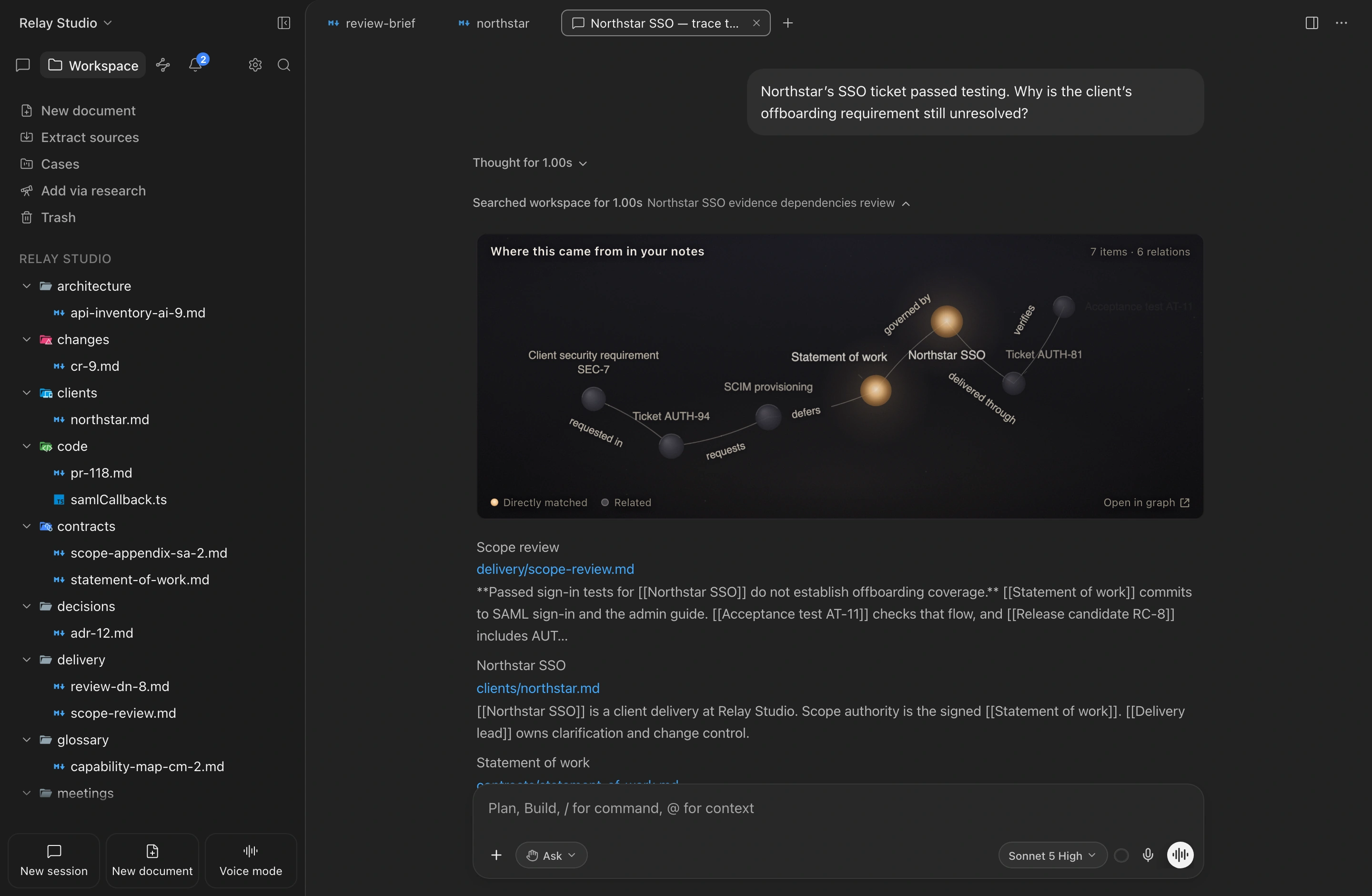

The sign-in tests for Northstar’s SSO ticket pass. The client’s security questionnaire also requires departing staff to lose account access within four hours. The team must check the contract and meeting notes to establish whether that requirement was agreed, then examine the implementation to see whether it is supported.
The fictional Relay Studio workspace brings together the signed scope, client conversations, architecture decisions, code changes, tests, and release records. Compare the agreed work with the delivered features and identify decisions still needed from the client and team.
Compare the signed contract with change requests to distinguish approved scope from proposed work.
Trace client feedback and meeting notes to the decisions the team recorded.
Connect architecture decisions to the relevant systems and the plan for building the feature.
Match agreed requirements to completed tasks, code changes, and test results to check what has been delivered.
The client uses “SSO” for both sign-in and revoking account access. Compare that language with the agreed SAML sign-in scope and the later account-management request. A shared label does not make the additional feature part of the signed scope.
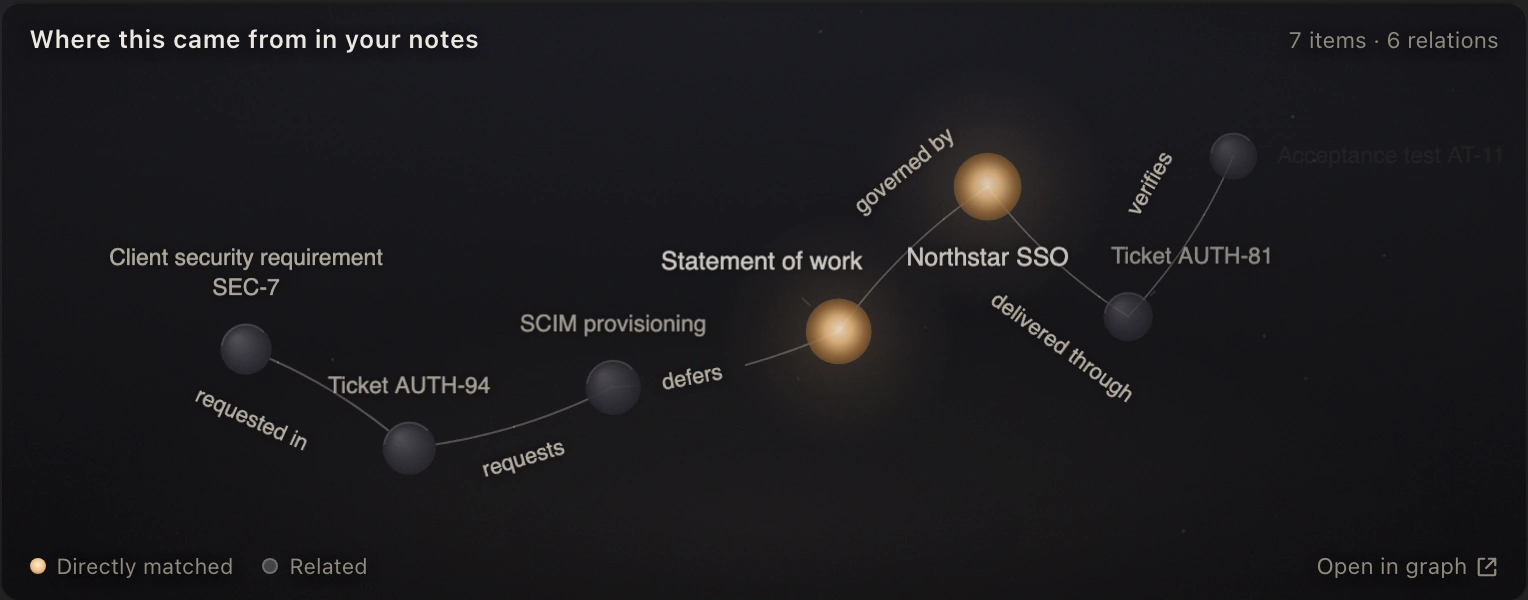
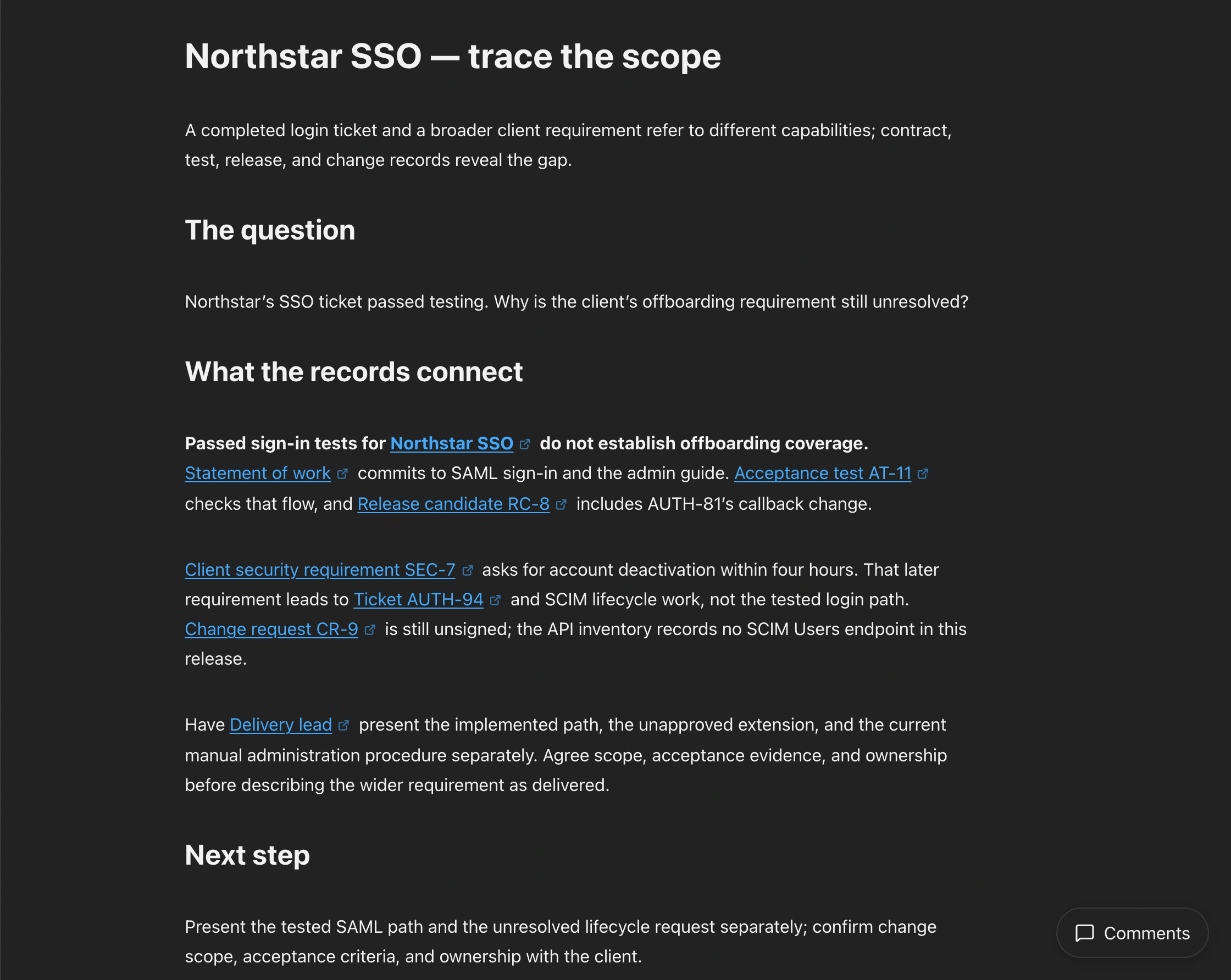
Northstar’s SSO ticket passed testing. Why is the client’s offboarding requirement still unresolved?
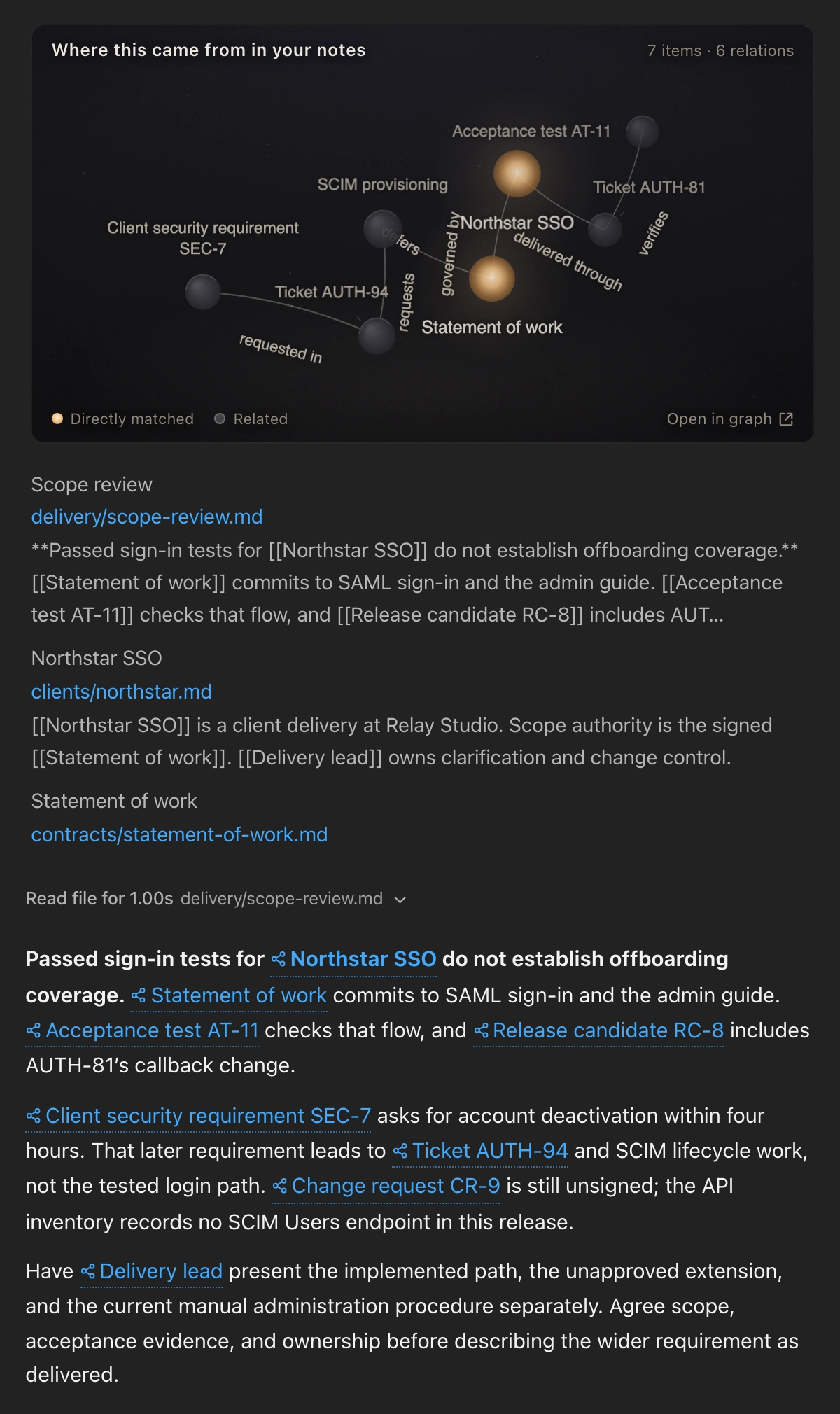
Trace architecture decision ADR-12 through AUTH-81, code change PR-118, test AT-11, and release RC-8. These records support the sign-in feature. The API inventory and AUTH-94, which is excluded from the release, explain why the account-management request remains unresolved.
Which Northstar requirements are covered by RC-8’s code and tests, and which are not?
Review the tested release, current account-administration runbook, and unsigned change request CR-9 together. Set out the account behavior, acceptance checks, and responsibilities that need agreement before committing to more work.
Draft Northstar’s delivery review with tested scope, the open lifecycle request, and decisions needed next.
Bring the project brief, key decisions, owners, and active tasks together so new teammates can get up to speed.
Trace a client issue to the relevant requirement, implementation records, and earlier resolutions.
Review similar projects to see what worked, what took longer than expected, and what the next proposal should account for.
EngramRAG
EngramRAG links the client’s language to specific features, recorded decisions, and implementation records. New requests and approved changes stay in the project history, so future reviews can trace both what was built and why.
Link the client’s terms to the corresponding features and systems.
Distinguish proposed ideas, approved changes, and delivered features.
Carry the rationale and agreed decisions into future project reviews.
Bring client records, team decisions, and implementation knowledge into one workspace for the next project review.