Trace materials into production
Match supplier certificates and receiving records to the material lots used in production.

Connect supplier records, production history, test results, and customer reports. See which products need review and which questions the next investigation should address.
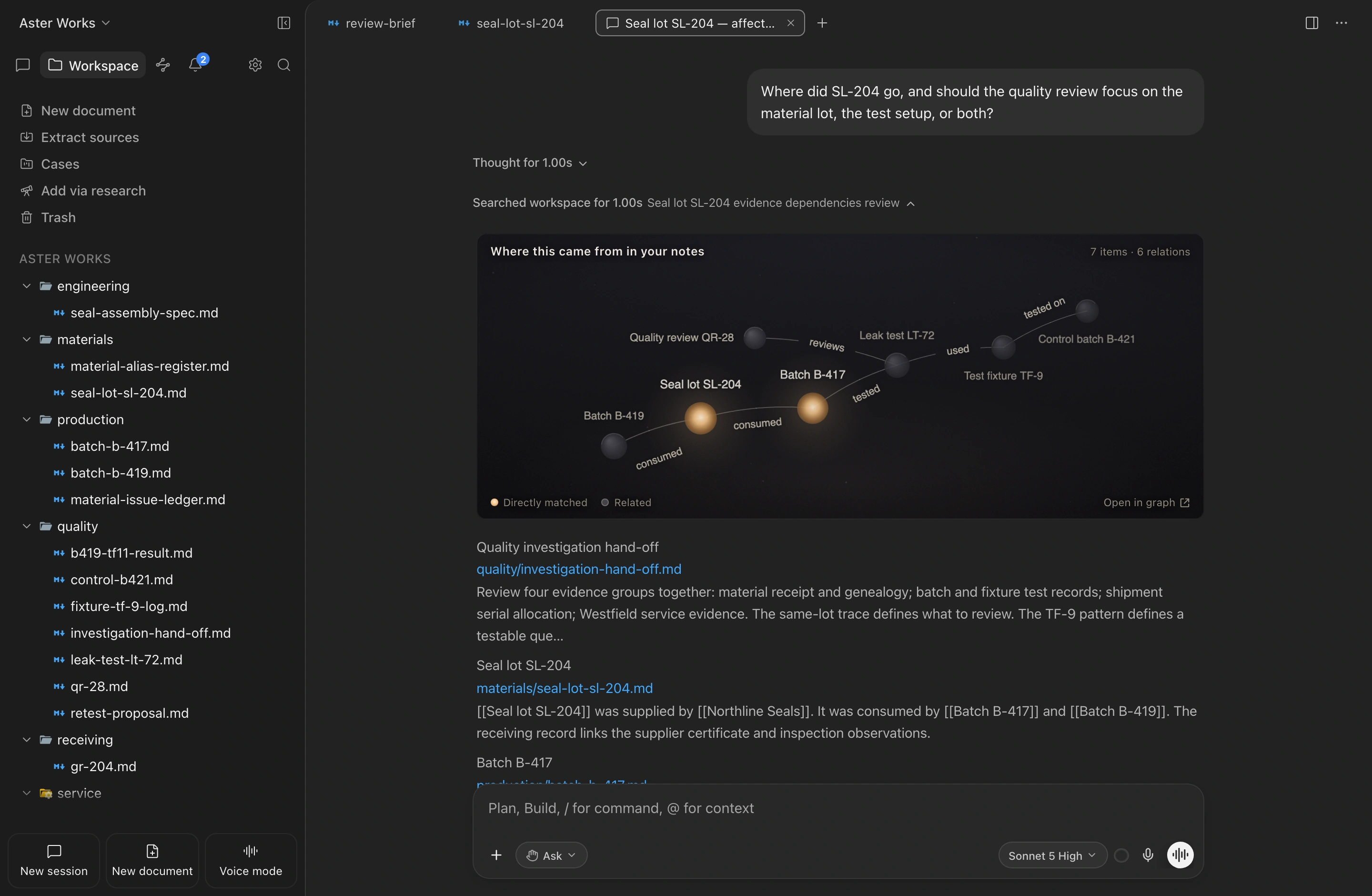
Two finished-product batches use seals from the same supplier lot, but only one records a test exception. A third batch uses the same seals from another lot and records a similar exception on the same test equipment. Material records, test conditions, and customer reports need to be reviewed together to identify what warrants further investigation.
The fictional Aster Works workspace connects seal lot SL-204 to finished batches and customer shipments. Review that trace alongside equipment records to investigate whether test conditions could help explain the results.
Match supplier certificates and receiving records to the material lots used in production.
Follow production records from each input lot to the finished batches and product serial numbers.
Review test results alongside equipment maintenance and verification records to identify conditions that need checking.
Match reported problems to shipment records to establish which products need further review.
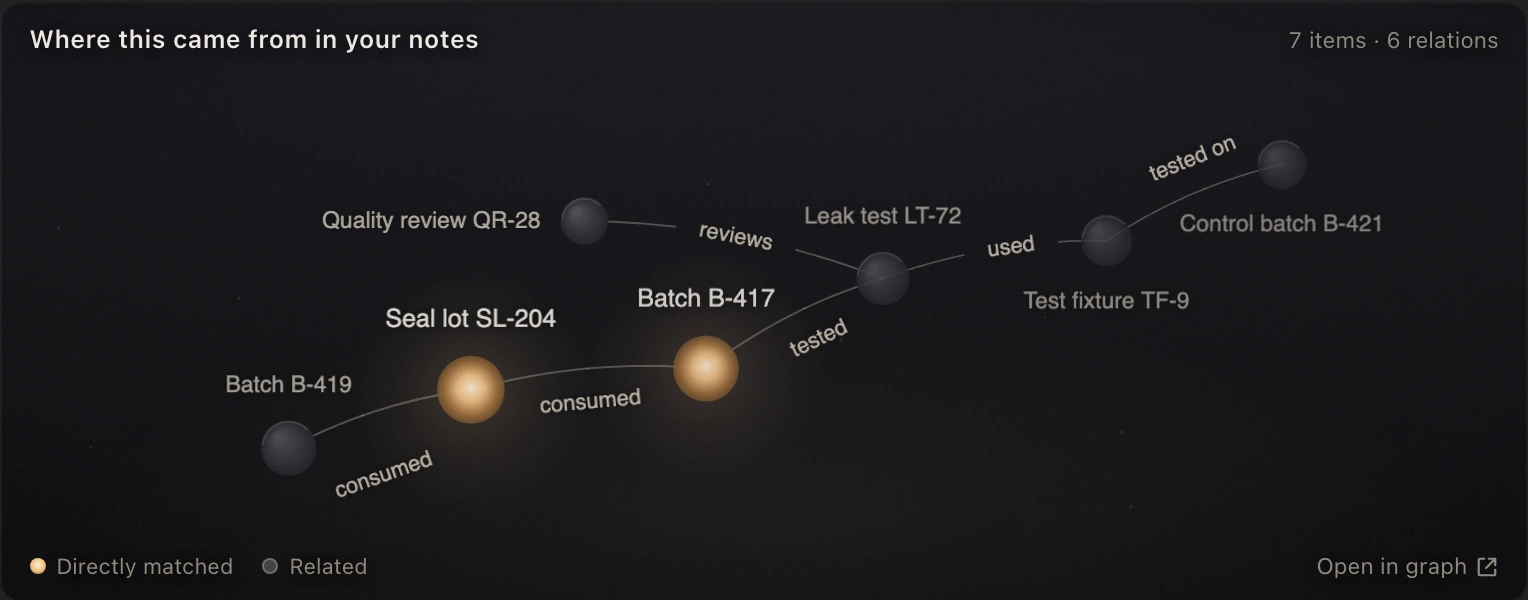
Trace SL-204 through assembly records and product serial numbers. Separate delivered units from stock, and keep the control batch that used another lot outside the SL-204 trace.
Where did seal lot SL-204 go, from material issue to customer serials?
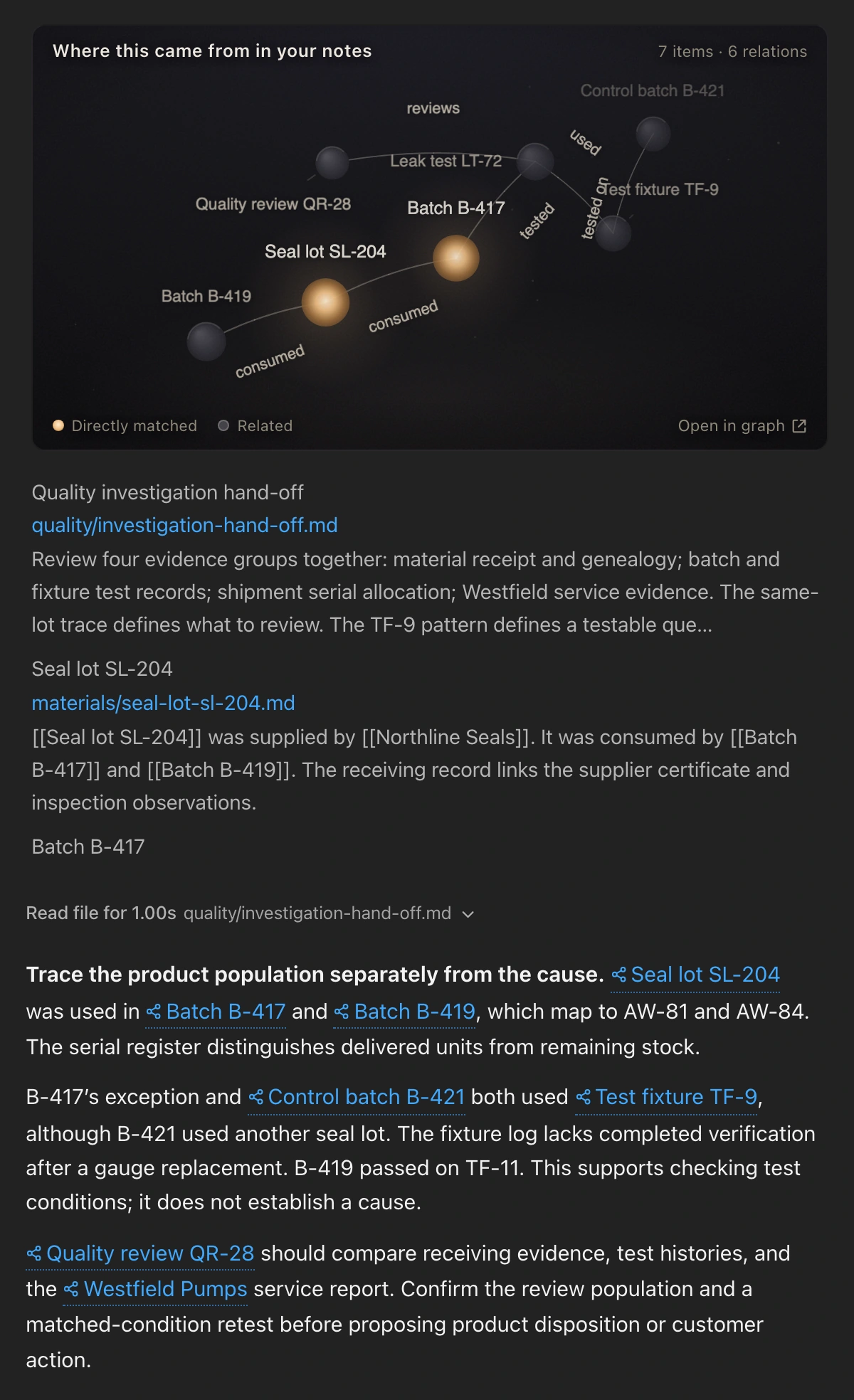
B-417 and control batch B-421, which used a different seal lot, show test exceptions on TF-9. B-419 passed on TF-11. Compare their material records with TF-9’s incomplete verification and the customer report to frame the next investigation.
Do the test exceptions share the seal lot, the test fixture, or both?
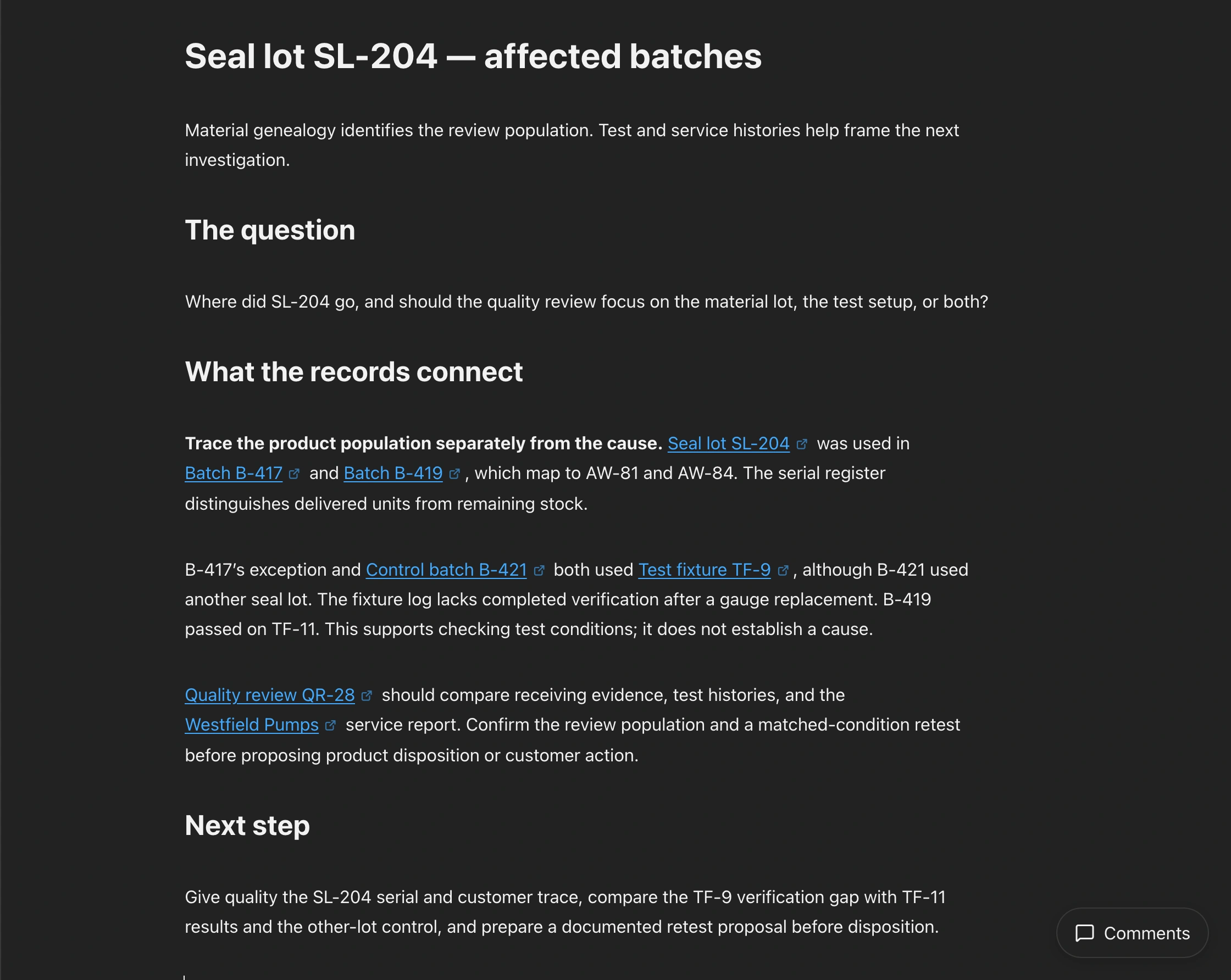
Bring supplier certificates, test results, customer reports, and shipment records into one brief. Draft a retest plan with matched conditions and list the checks needed before deciding how to handle the products.
Prepare QR-28 with the traceability scope, the fixture question, and the next evidence to collect.
Review certificates, incoming inspections, and past issues for the same supplier and material.
Connect equipment manuals, maintenance history, and operator observations so the next technician has the information needed for a review.
Find the parts, work instructions, and inspection records that reference a revised specification to review the impact of a change.
EngramRAG
EngramRAG connects material identifiers, production records, test histories, and saved findings. New customer reports can be added to the relevant lot and investigation while earlier observations remain available.
Connect material codes and lot usage to each finished batch.
Retain the test fixture, its verification status, and the other-lot comparison records alongside each result.
Add new customer reports and approved findings to the existing quality review.
Bring material, quality, and shipment records into one workspace so your team can trace an issue and plan its next checks.