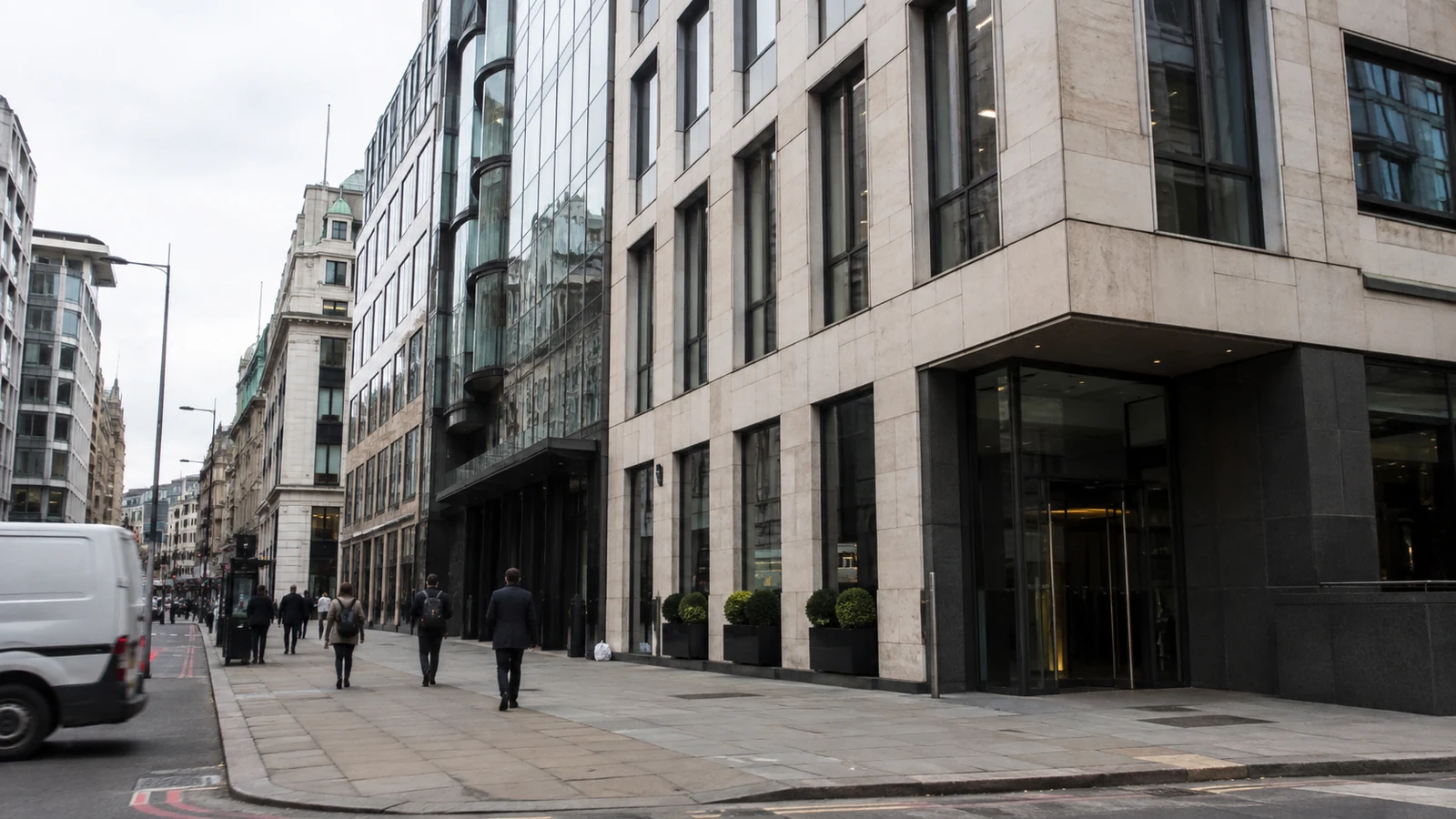
Find overlapping roadworks
Compare the dates and locations of planned closures to find conflicts between works.

A road closure can affect school buses, access to public buildings, and several departments’ work. Connect the relevant records so each team can see the impact and what it needs to confirm.
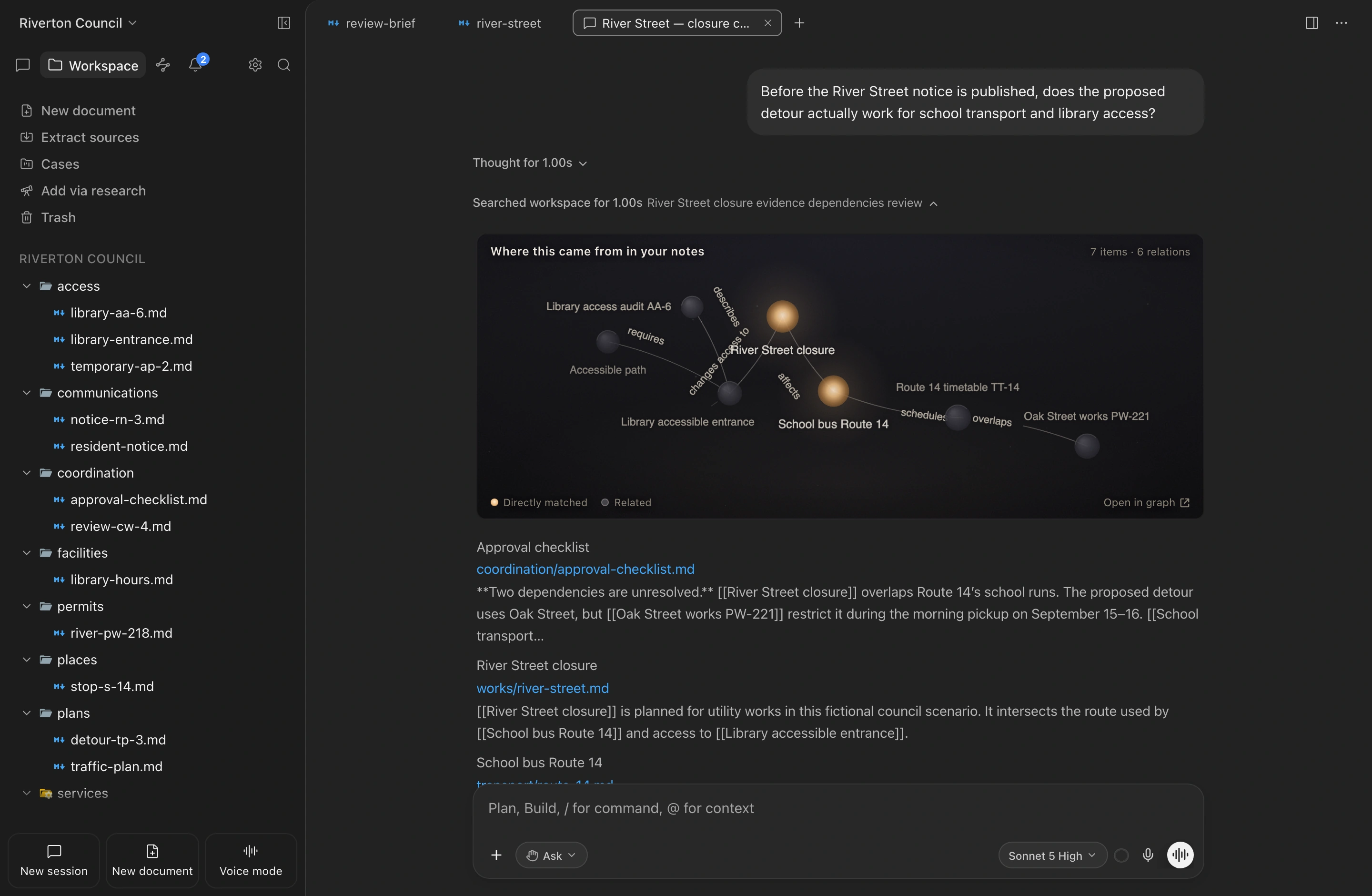
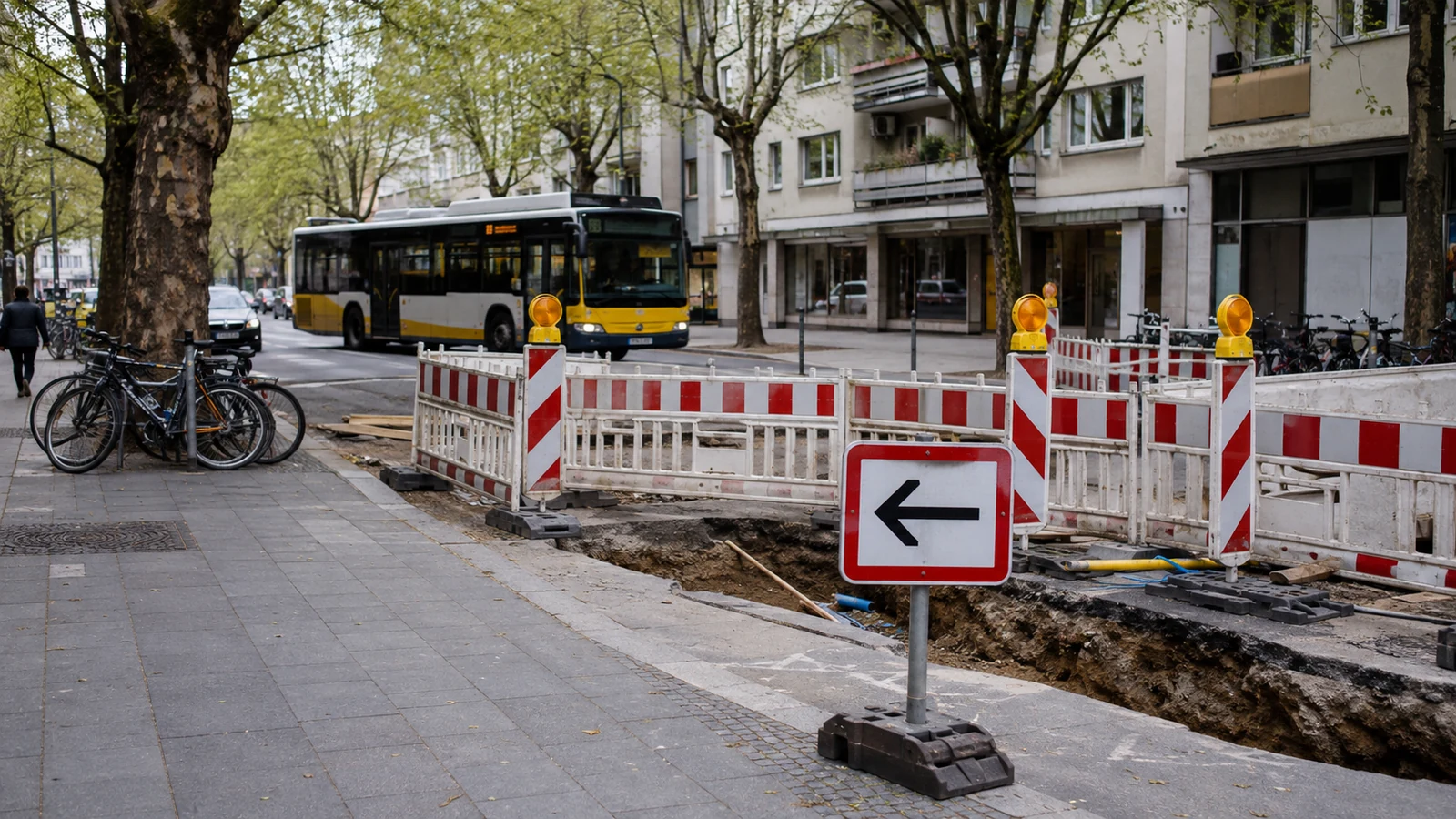
River Street is due to close during the school run. The proposed detour uses Oak Street, where roadworks overlap the morning pickup. The library plans to stay open, but its alternative entrance has steps. These schedules and access constraints are recorded by different departments.
The fictional Riverton Council workspace links works schedules, bus stops, access audits, operator replies, and a draft resident notice. Review how plans overlap in place and time, then identify the confirmations needed before publication.
Compare the dates and locations of planned closures to find conflicts between works.
Match road closures to school bus routes, stops, and pickup times to see which services need review.
Check whether alternative entrances and the routes to them meet visitors’ mobility needs.
Connect decisions and open questions to the teams responsible for confirming them.
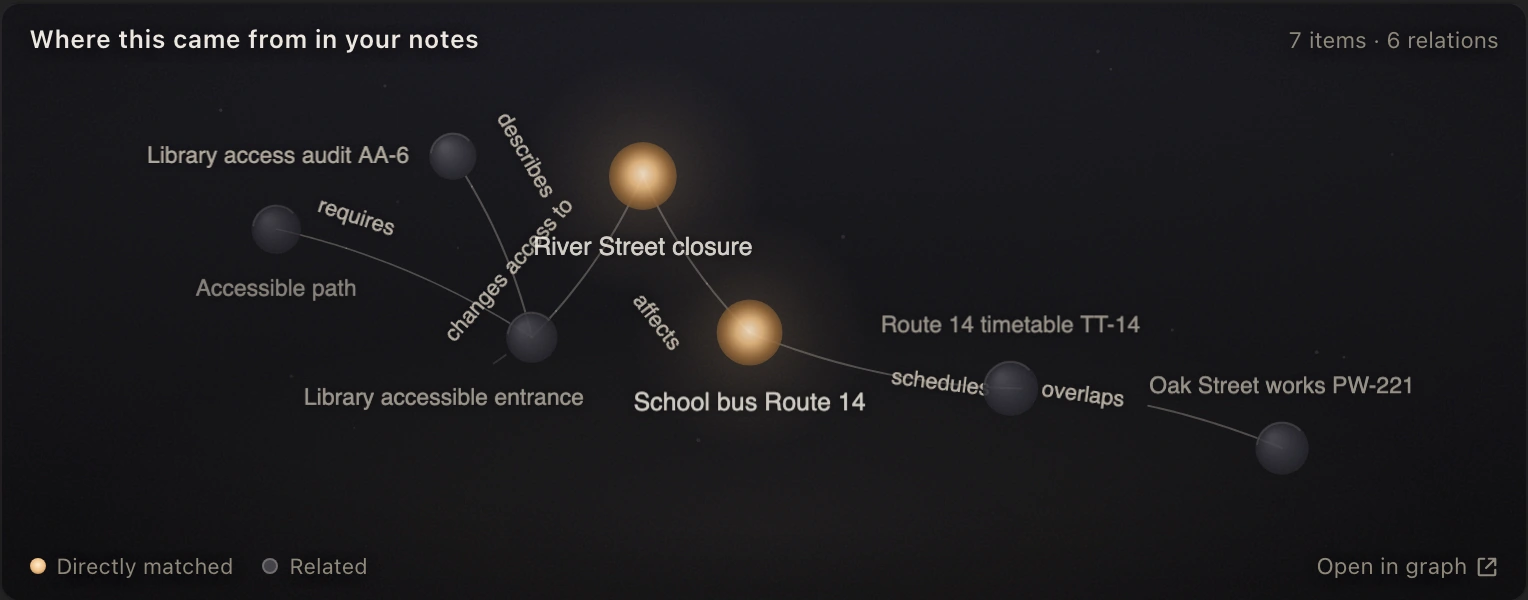
Compare the proposed route with nearby roadworks and the school bus Route 14 timetable. Oak Street’s morning restriction on September 15–16 overlaps the pickup that the detour is meant to preserve.
Before the River Street notice is published, does the proposed detour actually work for school transport and library access?
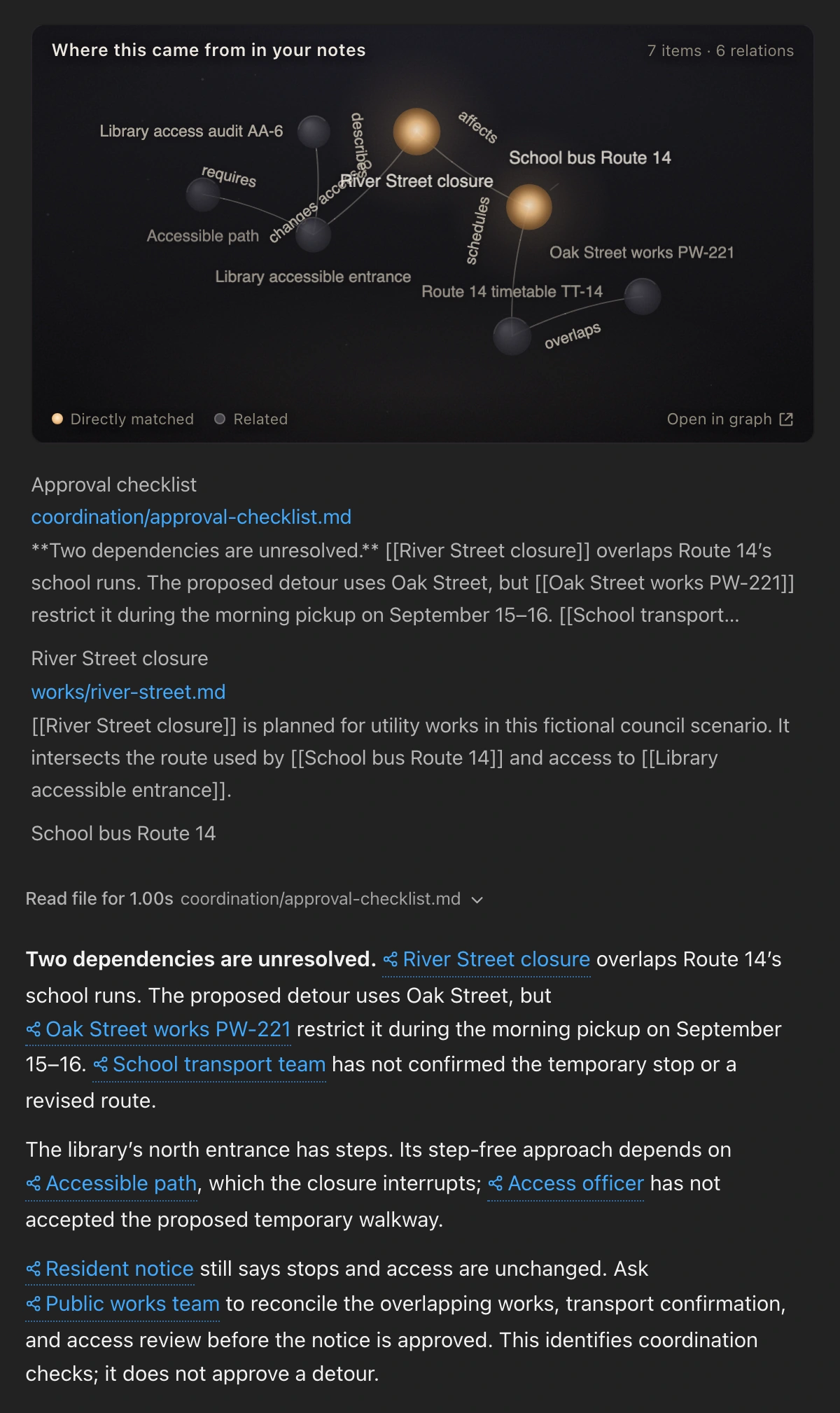
The library calendar shows it will be open, while the access audit records steps at the north entrance. The south entrance’s step-free path is interrupted by the works, and the proposed temporary walkway still needs the access officer’s review.
Can the library remain step-free during the closure, and what evidence is still missing?
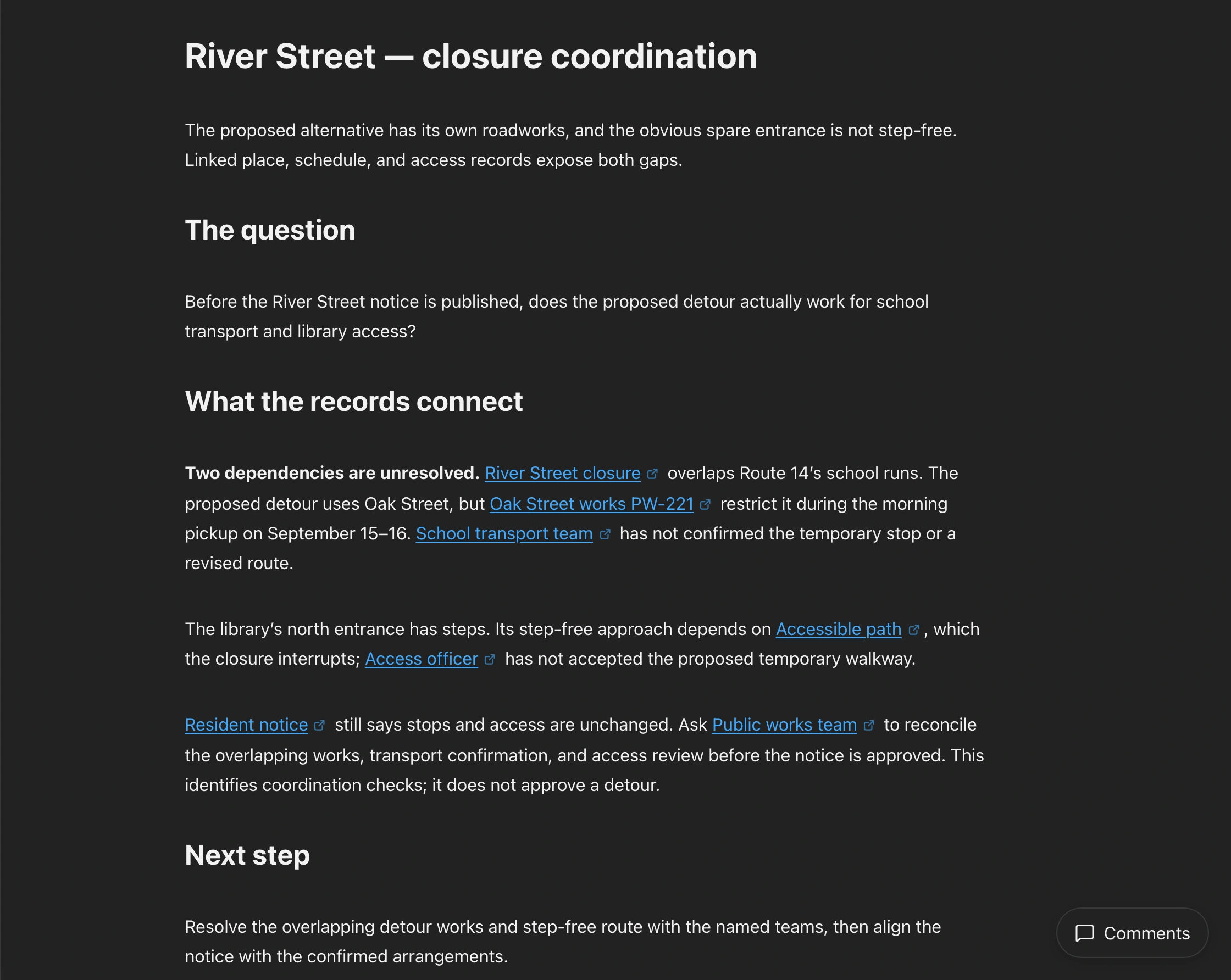
The draft says bus stops and library access are unchanged. Compare those statements with the detour and access records, list who must confirm each correction, and prepare a revised draft for public works, transport, accessibility, and communications staff.
Which statements in the River Street notice need changing, and who must confirm the replacement information?
Prepare a response by linking the enquiry to the relevant notice, local service, and responsible team.
Bring inspection findings, work requests, and affected services together to plan the next maintenance review.
When responsibilities change, pass on the programme’s decisions, commitments, and unresolved questions with the supporting records.
EngramRAG
EngramRAG connects places, service schedules, proposals, and recorded confirmations. When a route or access issue is resolved, the decision and responsible team remain available for the next notice or nearby works review.
Match place names, route identifiers, and facility records across departments.
Keep proposed arrangements distinct from confirmed decisions, with the date of each confirmation.
Keep decisions and responsible teams linked to the public services they concern.
Bring plans, service records, and departmental decisions into a shared workspace so teams can coordinate their next steps from the same information.